
For years, balconies were treated as leftover spaces—used for drying clothes, storing unused objects, or placing a few
plants. That relationship is changing. As cities become denser and homes become more carefully planned, the balcony is
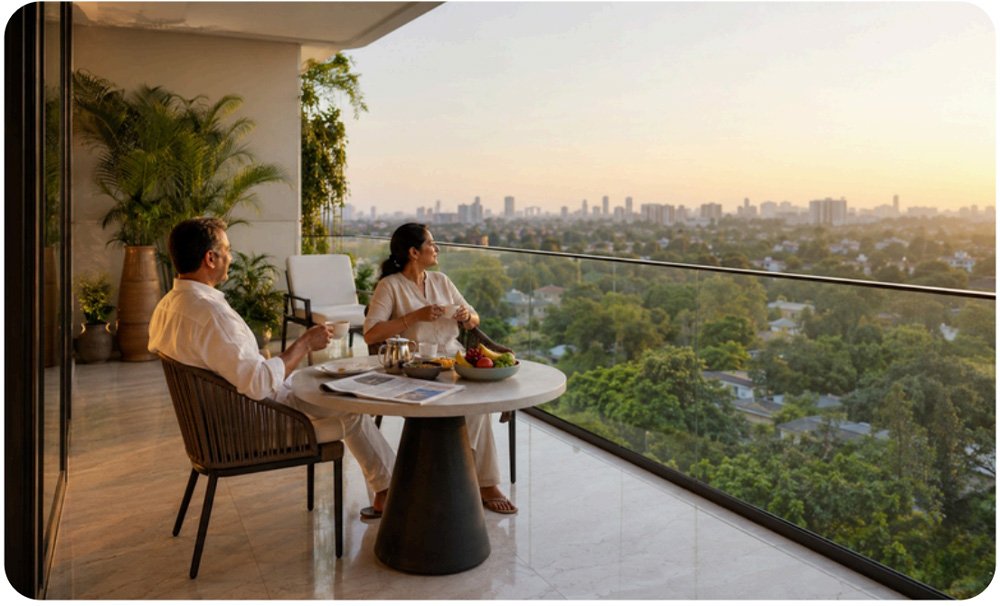
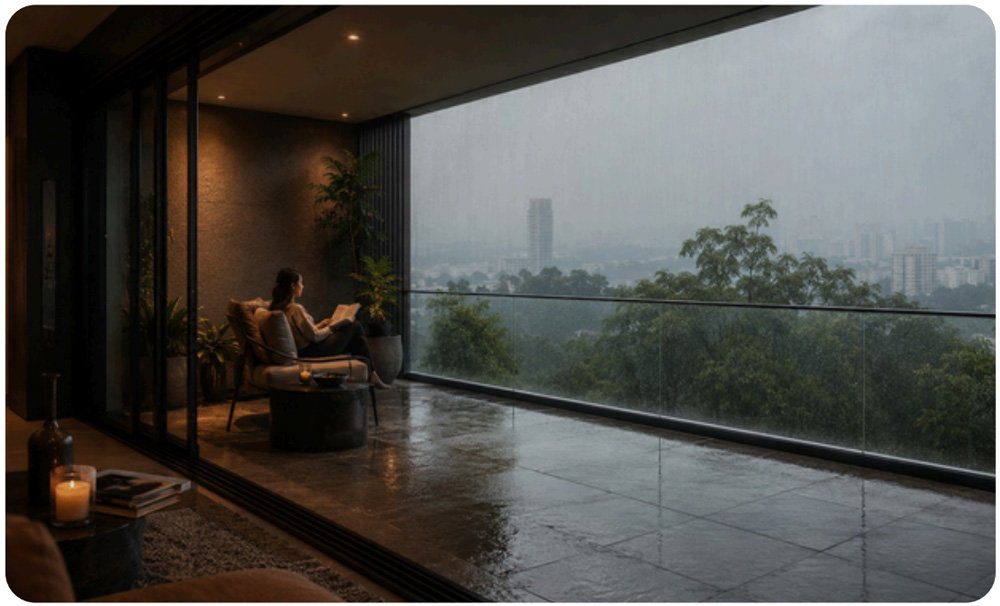
emerging as one of the most valuable spaces in modern architecture. It is now a breakfast corner, a small garden, a reading
retreat, a temporary workspace, and a place where families reconnect at the end of the day. The balcony is no longer simply
attached to the living room. It is becoming the new living room.
Why Balconies Matter More Today
Modern life keeps people indoors for longer periods. A private balcony offers something that no conventional room can fully
recreate—direct contact with sunlight, fresh air, changing weather, and the world outside.
Even a compact balcony can become:
- A peaceful morning tea corner
- A work-from-home space
- A miniature urban garden
- A reading and relaxation zone
- A safe outdoor area for families
- A comfortable space for evening conversations
Its value is not measured only in square feet. It is measured in how often people want to use it.
The Invisible Expansion of the Home
A room visually extends as far as the eye can travel.
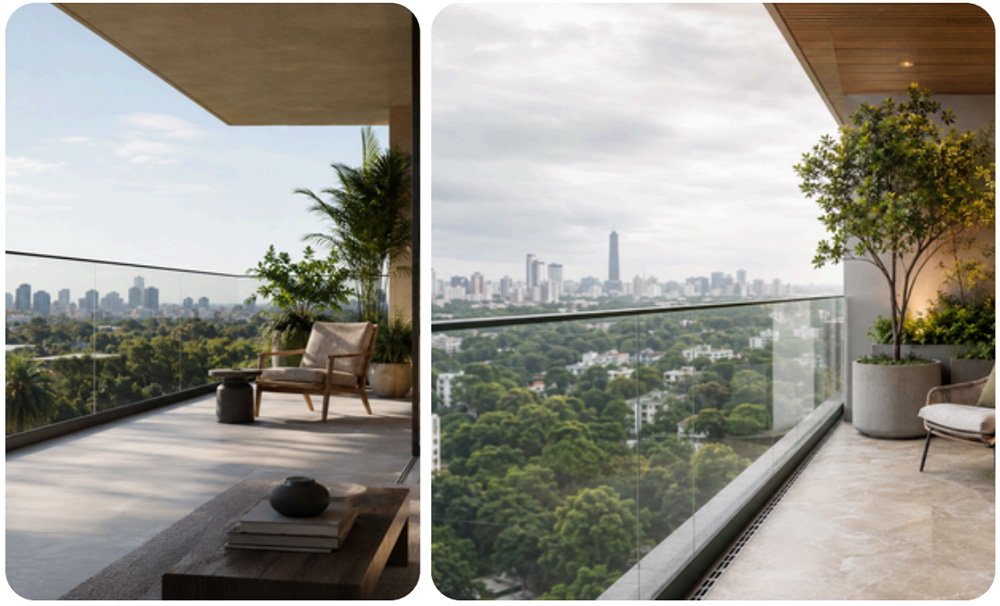
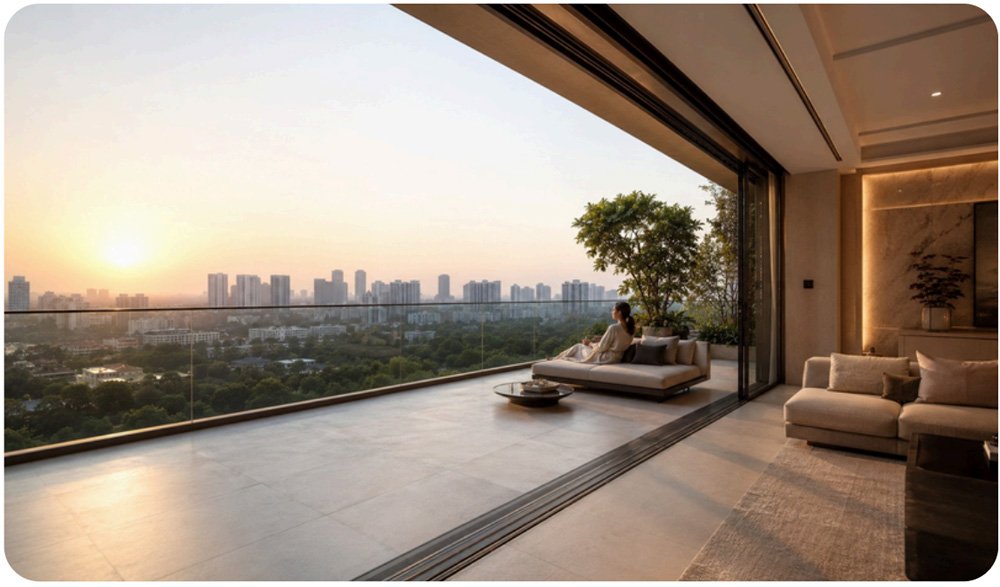
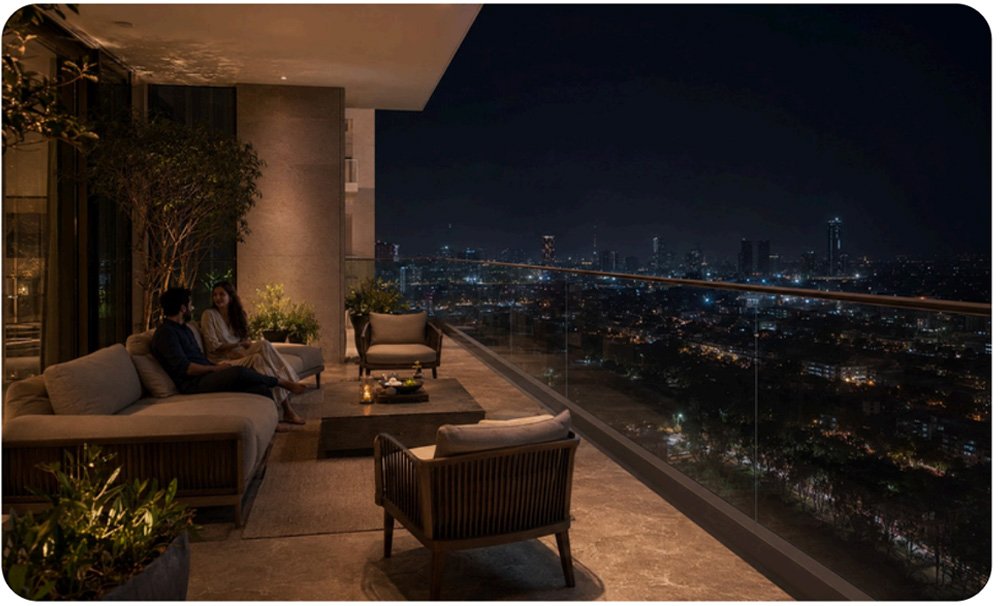
When a living room opens onto a balcony with a clear glass railing, the view continues beyond the physical floor area.
Natural light enters more freely, the surroundings become part of the interior, and the entire home feels larger.
Bulky profiles, unnecessary posts, clamps, and horizontal members can interrupt this experience. A minimal glass railing
creates a physical boundary while preserving visual openness.
The railing therefore does more than protect the balcony edge. It changes how the entire home is experienced.
Safety Makes Openness Possible
Visual openness is valuable only when supported by dependable engineering.
A balcony railing may look simple, but its performance depends on several connected elements:
- Correct glass specification
- Strong aluminium profiles
- Appropriate fasteners
- A suitable structural base
- Accurate measurements
- Proper installation
- Consistent alignment and spacing
This becomes especially important in high-rise buildings, curved balconies, and areas exposed to strong wind and changing
weather.
Homes with children or pets require additional planning. Furniture and climbable objects should be kept away from the edge,
gaps must be controlled, and the railing should be inspected periodically. Good safety design should not make a balcony feel frightening or enclosed. It should allow people to use the space naturally and confidently.
The Railing Is Part of the Architecture
Balcony railings are often selected near the end of a project, but they strongly influence the appearance of the entire building.
Across a façade, railings create repeated lines that affect its visual rhythm. Heavy or inconsistent profiles can make a building appear crowded, while a refined glass railing can create a lighter and more continuous elevation.
Colour also plays an important role.
Matte black creates a crisp, contemporary outline. Champagne and brushed-gold finishes add warmth to luxury residences.
Silver offers a clean, neutral appearance, while bronze and gunmetal complement darker stone, wood, and textured façades.
The objective is not to select the most fashionable finish. It is to choose one that feels like a natural continuation of the architecture.
Curved Balconies Need Specialized Solutions
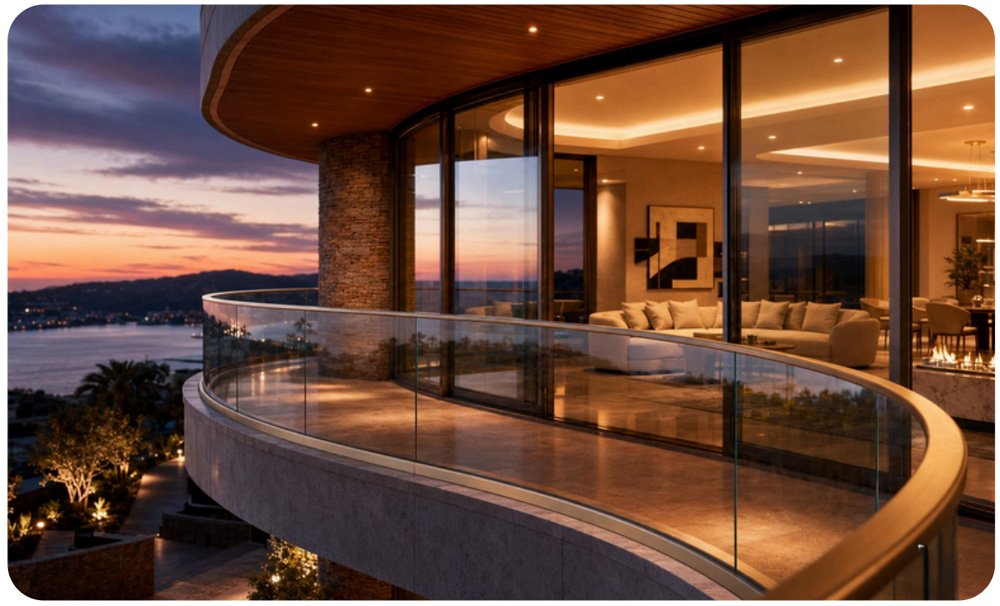
Curved balconies and flowing terraces give buildings a distinctive architectural identity. However, they cannot be completed properly by forcing straight railing components into curved spaces.
A bend balcony railing requires accurate site measurements, carefully formed profiles, correctly processed glass,
coordinated handrails, and precise installation. When these elements are planned properly, the railing follows the architecture smoothly instead of appearing segmented or added later.
ibax supports straight and curved balcony configurations while maintaining clean detailing, premium finishes, and the structural reliability required for demanding projects.
Designing the Balcony Like a Real Room
A successful balcony needs more than an attractive railing.
Slip-resistant flooring, comfortable furniture, warm lighting, greenery, drainage, shade, and weather protection should work
as one coordinated environment. The balcony should also be designed around its actual purpose.
A breakfast corner requires a different layout from a family balcony, garden space, or evening lounge. When every detail is considered together, the balcony becomes a complete room—one whose ceiling is the sky and whose main artwork is the view.
The ibax Approach
ibax approaches balcony railings as complete architectural systems rather than isolated products.
The focus is on:
- Maximum glass visibility
- Slim aluminium detailing
- Minimal visual obstruction
- Straight and curved railing solutions
- Premium coordinated finishes
- Site-specific technical guidance
- Specialized fasteners and accessories
- Professional installation practices
- Long-term strength and stability
This system-based approach allows the railing to become part of the building’s design language rather than an element added after construction.
Conclusion: The Room Without Four Walls
The modern balcony is no longer an unused exterior edge. It is a place for work, rest, greenery, conversation, and connection
with the outdoors.
As its role changes, its design must evolve too.
A thoughtfully designed railing protects without dominating, creates openness without uncertainty, and allows the balcony to
feel like a genuine extension of the home.
Because the most valuable room in a modern home may be the one without four walls.
ibax — Creating Extraordinary Spaces.