
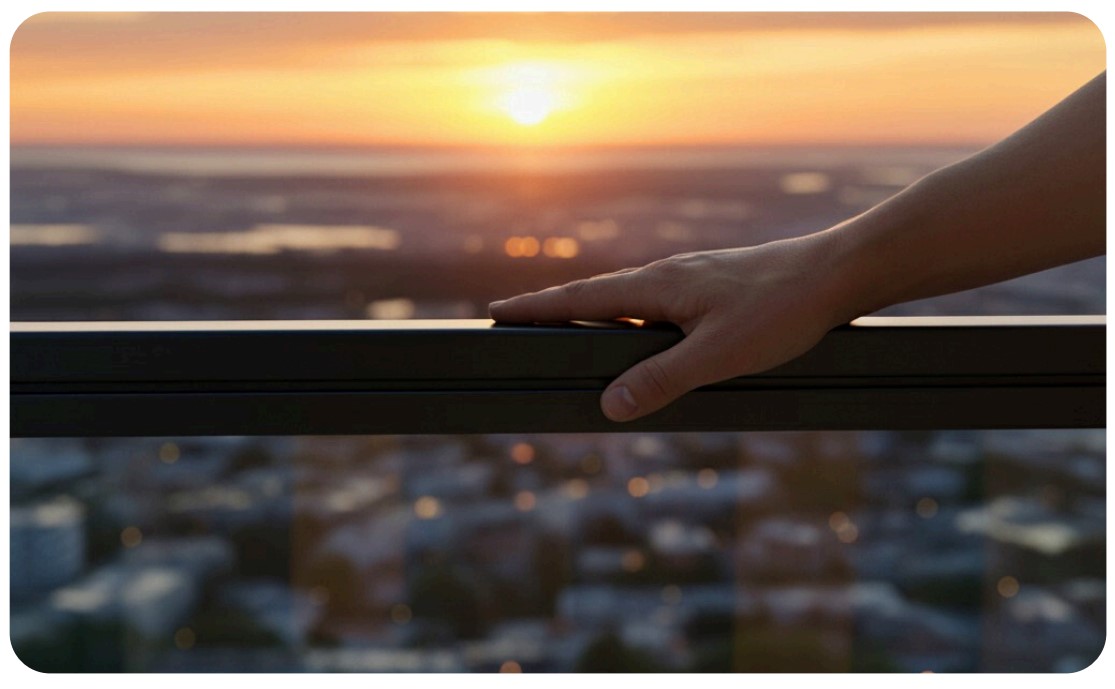
A glass railing may look sleek and modern — but did you know that the wrong installation could turn it into a hidden danger?
Every year, countless projects fail because people ignore proper spacing, fasteners, or curing times. The result? Wobbly
railings, cracked glass, and worst of all — unsafe balconies and staircases. This blog will show you the right way: from the
history of railings, to common mistakes, to the step-by-step method trusted by professionals.
Railings: From Ancient Barriers to Modern Glass Walls
Thousands of years ago, people built stone boundaries to keep livestock (and people) from falling. The Romans advanced
things with bronze and cast iron railings, both decorative and secure. Fast forward to the industrial age, and steel and
concrete railings dominated.
Today, glass railings with aluminium profiles have become the global standard. They combine:
✨ Unobstructed views
✨ Luxury aesthetics
✨ Reliable safety
But while design has evolved, one thing hasn’t changed: the primary job of railings is still safety.
The Mistakes People Make (and Why They’re Costly)
Here’s what often goes wrong when glass railings aren’t installed properly:
🚫 Fixing railings on weak bases (like hollow blocks instead of solid concrete).
🚫 Using cheap or wrong fasteners not designed for highrise wind loads.
🚫 Forgetting the correct gaps between glass panels, causing cracks over time.
🚫 Ignoring adhesive curing, leading to loose anchor rods.
🚫 Installing thin glass that can’t handle stress.
Each shortcut may save a little time, but it risks lives, durability, and your investment.
The Professional Way to Install Glass Railings
1. Floor-Specific Fasteners
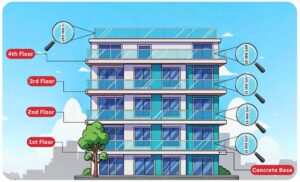
Your building height determines not only the fastener size but also the bottom base profile you must use. Always match the
profile to the right base, glass, and railing system for structural safety.
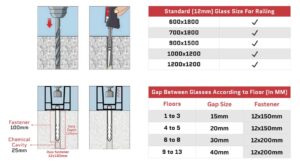
Floors 1–3: 12×100mm fasteners + base profile for 15mm glass gap
Floors 4–5: 12×150mm fasteners + base profile for 20mm gap
Floors 6–8: 12×200mm fasteners + base profile for 30mm gap
Floors 9–13: 12×200mm fasteners + base profile for 40mm gap
👉 Rule of Thumb: At least 13 fasteners per 16 ft of railing are required for proper anchorage.
2. Standard Glass Thickness
- 12mm toughened or 13.5mm laminated security glass.
- Standard sizes like 600×1800, 700×1800, 900×1500 mm etc.
- Always maintain a 25mm clearance between the glass and wall.
3. Precise Drilling & Adhesive Steps
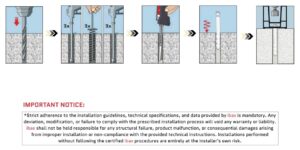
- Drill to exact embedment depth with a hammer drill.
- Clean boreholes thoroughly (compressed air + brushes).
- Purge adhesive until fully mixed, then inject from bottom up.
- Insert rod with a twisting motion for full bonding.
- Let adhesive cure fully before tightening.
- Apply torque with a calibrated wrench
Why Gaps Are the Unsung Heroes of Railing Safety
- Many people focus on the glass and aluminium — but gaps are what protect the system from failure.
- Glass-to-wall gap: Always keep 25 mm. Prevents contact with rigid structures.
- Glass-to-glass gap: Must increase with building height: 15mm (low-rise) → 40mm (high-rise)
- This flexibility lets the railing absorb wind, sway, and thermal expansion without breaking. Think of it as the “breathing
space” your railing needs.
Why This Matters for You
Following these steps means:
✅ Your railing won’t wobble over time.
✅ Glass panels won’t crack from stress.
✅ You’ll enjoy panoramic views without sacrificing safety.
✅ The installation remains compliant with international standards.
In short: you’ll get peace of mind wrapped in elegance.
Conclusion
A glass railing isn’t just another design element. It’s the barrier between comfort and catastrophe. By avoiding common
mistakes, respecting spacing rules, and following professional installation practices, you’ll ensure your railing is both
beautiful and secure. Because in architecture, details don’t just define style—they define safety.